Why the Best Party You'll Have This Year Might Not Have a DJ or a Drink Minimum
Let's be honest about the American bar scene for a second. You show up, you overpay for a drink, you shout over music that's slightly too loud for conversation, and you leave two hours later having made zero meaningful human contact. Maybe you got a blurry photo out of it. Maybe you woke up the next morning wondering why you went at all.
Something isn't working. And a growing number of people — especially in cities with sizable Balkan communities — are finding the alternative in the most unexpected place: the kind of night out their grandparents used to have.
The Sit-Down, Stay-Awhile Philosophy
In Balkan culture, going out was never really about the venue. It was about the people at the table, and the implicit agreement that nobody was leaving until the conversation was done. That could mean midnight. That could mean 3 a.m. The point wasn't the clock — it was the connection.
This is the principle behind what's quietly emerging in cities like Chicago, New York, St. Louis, and parts of the Pacific Northwest: social spaces modeled on the Balkan idea of purposeful gathering. Not bars, not clubs, not restaurants exactly — something in between. Places where the architecture of the evening is built around staying, talking, and actually knowing the person sitting across from you.
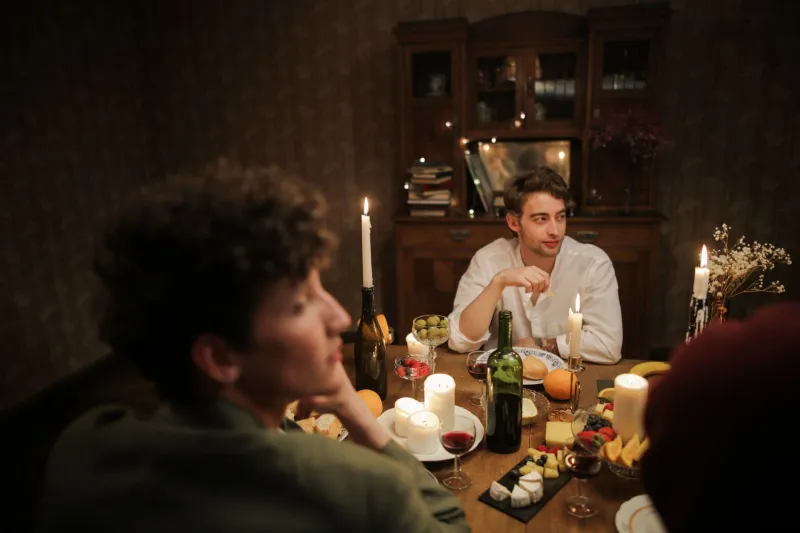
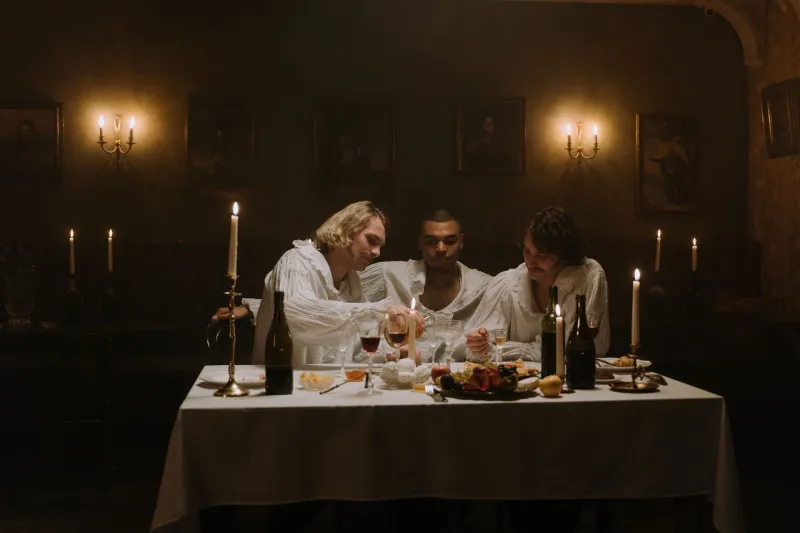
Think low lighting, long communal tables, food that arrives slowly and in waves, music at a volume that allows for sentences longer than four words. Think conversations that actually go somewhere.
"We wanted to create a space where people felt like they were at someone's home," says the owner of one such venue in Chicago's Pilsen neighborhood, which opened two years ago and now has a wait list on weekends. "In my family, you never rushed a guest out. That was the whole point — you stayed."
Gen Z's Quiet Rejection of the Hookup-and-Bounce Model
Here's where it gets interesting. The demographic most drawn to these slower, conversation-first social spaces isn't the Balkan diaspora — it's American Gen Z.
Multiple venue owners and social researchers have noted the same pattern: young Americans in their early to mid-twenties are increasingly over the traditional nightlife formula. The apps haven't delivered on the promise of connection. The bars feel transactional. The clubs are expensive and alienating. There's a hunger for something more substantial, and Balkan-influenced spaces — whether they're explicitly branded that way or not — are filling that gap.
Part of it is the multi-generational element. In a traditional kafana or equivalent gathering space, it's completely normal for a table to include a 70-year-old and a 25-year-old having a real conversation. That's not weird — that's how it's supposed to work. For a generation raised on age-segregated social media, that kind of mixing is genuinely novel. And apparently, genuinely appealing.
"I went to this place in Astoria with my friend and her parents," says one 24-year-old from Queens who asked not to be named. "And I ended up talking to her dad for like two hours about his life in Yugoslavia. It was the best night I'd had in months. I didn't look at my phone once."
What These Spaces Actually Look Like
They're not all flying Balkan flags or serving ćevapi (though some are, and the ćevapi is excellent). The influence is more often felt in the philosophy than the branding.
Some are explicitly Balkan-owned restaurants that have extended their hours and leaned into the late-night gathering culture they grew up with. Others are newer venues started by second-generation diaspora members who wanted to recreate something from their parents' stories. And some are American-owned spaces that have simply absorbed the principles — slower pacing, communal seating, a genuine disincentive to leave early — without necessarily knowing where those principles came from.
What they tend to share: a rejection of the turnover model. The American hospitality industry is famously obsessed with table turns — get people in, get them out, fill the seat again. The Balkan model is essentially the opposite. You want people to linger because lingering people order more, yes, but also because the atmosphere created by a room full of people genuinely enjoying each other is the whole product.
The Social Science Behind the Shift
There's research to back up why this model resonates. Studies on loneliness in America — and there are a lot of them right now — consistently point to the collapse of what sociologists call "third places": spaces that are neither home nor work, where casual community happens. Bars used to serve that function. For a lot of people, they no longer do.
What Balkan-influenced gathering spaces offer is something closer to the original third-place promise: low-stakes, long-form, socially mixed interaction with no particular agenda. You don't need to be on your best game. You don't need to perform. You just need to show up and stay a while.
For a generation that has been told connection is available 24/7 through a screen and has found that to be largely untrue, the appeal of an actual room with actual people and an actual reason to stay is hard to overstate.
Is This a Trend or a Shift?
That's the real question. Plenty of cultural imports have had their moment in American nightlife and faded. But this feels different, partly because it's not being driven by novelty. Nobody's going to these places because Balkan culture is cool right now (though it increasingly is). They're going because they're tired of the alternative.
When the appeal of a social space is rooted in something as fundamental as human connection, it tends to have staying power. The kafana didn't survive centuries in the Balkans because it was trendy. It survived because it worked.
America might be just now figuring that out.