Pull Up a Chair: The Kafana Movement That's Quietly Changing How Americans Socialize
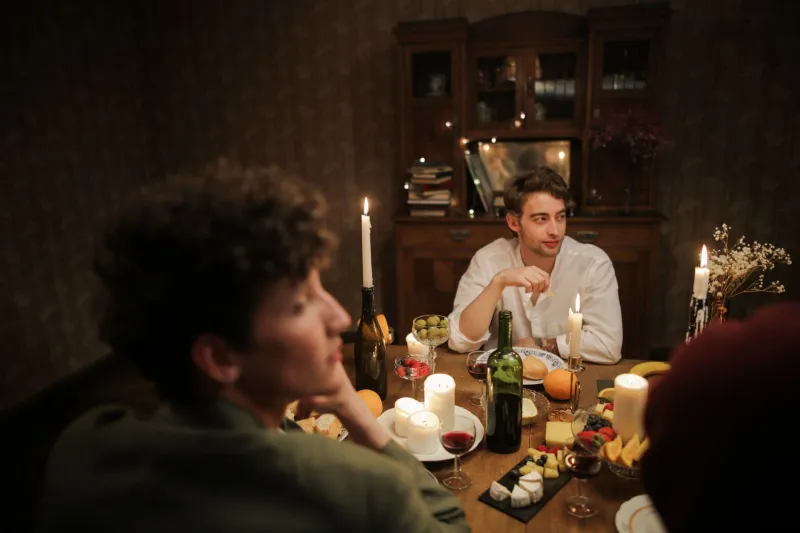
It started, as most good things do, with food. Specifically, with a spread of burek, grilled meats, and enough ajvar to paint a room, laid out on a folding table in someone's Chicago backyard on a warm Saturday in September. The host, a Bosnian American named Selma, had invited maybe fifteen people. By eight o'clock there were forty. By midnight, nobody wanted to leave.
"That's when I realized something," Selma says, laughing. "Americans are starving for this. They just don't know what this is yet."
What this is, in the simplest terms, is a kafana — the Balkan institution that sits somewhere between a café, a tavern, and your grandmother's living room. It's a place defined less by what it serves and more by what it refuses to rush. Conversation. Connection. The radical act of simply being present with other people, across generations, without an agenda.
And right now, in living rooms and pop-up spaces and repurposed storefronts from New York to Los Angeles, Balkan Americans are bringing it back.
What a Kafana Actually Is
If you've never been to one, a kafana is difficult to explain to an American because it doesn't map cleanly onto anything that exists here. It's not a restaurant, exactly — the food matters, but it's not the point. It's not a bar — alcohol is present, but it's not the engine. It's not a community center — there's no programming, no agenda, no event coordinator with a clipboard.
A kafana is, at its core, a permission structure. Permission to sit for three hours. Permission to talk about something real. Permission to let your elderly uncle and your college roommate end up at the same table and actually find something to talk about. The kafana doesn't segregate by age, income, or social circle the way American social spaces tend to. Everyone is welcome, and the expectation is that you'll stay long enough to mean it.
For Balkan communities, this was just normal life. For a lot of Americans in 2024, it sounds like a wellness retreat.
The Loneliness Problem Nobody Wants to Talk About
Here's the uncomfortable context: the United States Surgeon General declared loneliness a public health epidemic in 2023. Studies consistently show that Americans have fewer close friends than they did thirty years ago, spend less time in communal spaces, and report higher rates of social isolation across nearly every demographic. The digital revolution promised connection and delivered the opposite — an endless scroll of curated highlights from people we barely know, substituting for the messy, inconvenient, deeply nourishing work of actual presence.
Into this landscape walks the kafana, with its total indifference to efficiency.
Nemanja, who runs informal pop-up kafana evenings out of a rented space in Astoria, Queens, has watched the dynamic play out firsthand. "I started doing these for the community — for Serbs and Bosnians and Croats who missed home. But now I've got Americans coming who have no Balkan connection at all. They just heard there was a place where people actually talk to each other. That's wild to me. That used to be just... Tuesday."
Ritual Is the Point
What Balkan Americans instinctively understand, and what's slowly dawning on the Americans who've wandered into these spaces, is that ritual is load-bearing. The specific way coffee is made and served. The order in which food arrives. The toast before the first drink, and the second toast, and the third. The expectation that you'll greet every person in the room when you arrive and again when you leave. These aren't arbitrary customs — they're a technology for creating intimacy between people who might otherwise stay strangers.
American social life has largely abandoned ritual. We meet for coffee (thirty minutes, one eye on the phone) or drinks (loud bar, no real conversation) or dinner (expensive, performative, Instagrammed before anyone takes a bite). The kafana rejects all of that. The ritual is the point. The slowness is the point. The fact that your seventy-year-old neighbor ends up deep in conversation with a twenty-five-year-old about something that matters? That's the whole product.
Selma, back in Chicago, has started hosting her backyard gatherings monthly. She calls them "open table" nights, deliberately avoiding the word kafana because she wants Americans to come without preconceptions. "Once they're there, they get it," she says. "I've had people cry. Not because anything sad happened — just because they realized they hadn't felt that connected to other people in years."
The Intergenerational Piece
One of the most striking things about these gatherings is who shows up. In a country where social life is almost entirely age-segregated — kids with kids, young professionals with young professionals, retirees with retirees — the kafana model insists on mixing. Grandparents sit next to college students. Middle-aged professionals end up in conversation with teenagers. This isn't forced or programmatic; it just happens, because the space assumes everyone belongs.
For Balkan Americans, this is unremarkable. Of course your baka is at the table. Of course the neighbor's kid is running around. Of course the oldest person in the room has something worth hearing. But for many Americans, the experience of genuine intergenerational connection — not a school visit to a nursing home, but an actual evening where age differences dissolve over shared food and conversation — is startlingly new.
Analog in a Digital World
There's something almost countercultural about the kafana's insistence on the physical and the present. No event hashtag. No reservation app. No curated playlist carefully calibrated to project a particular identity. Just people, food, time, and the understanding that being here, fully here, is the whole point.
As American culture slowly wakes up to the costs of its own atomization, the kafana model is looking less like a nostalgic immigrant tradition and more like a genuinely radical proposal. You don't need an app. You don't need a program. You need a table big enough for everyone, food worth lingering over, and the willingness to stay until the conversation runs out.
In Balkan culture, the conversation never runs out. That's the whole idea.