Baka Knew Best: How Balkan Parenting Is Having Its Moment in American Mommy Culture
There's a thread on r/Parenting that keeps getting reposted. A user describes their childhood: no screens at the dinner table, chores without negotiation, emotional outbursts met with calm but firm redirection, and a grandmother who lived down the hall and had full authority over everything. The comments explode. Where do I sign up? This sounds healthier than anything I've read in a parenting book. What the original poster didn't mention — or maybe didn't think was relevant — is that they grew up in a Bosnian household in Dearborn, Michigan.
That's kind of the thing about Balkan parenting. It's been here the whole time. It just didn't have a brand.
The Problem With Parenting in 2025
American parenting culture is exhausted. The helicopter parenting era produced a generation of adults who've written extensively about its effects — anxiety, difficulty with discomfort, a complicated relationship with failure. The pendulum swung toward gentle parenting, which brought its own backlash. Now millennial and Gen Z parents are somewhere in the middle, scrolling through conflicting advice at 2 a.m., wondering if they're doing any of this right.
Into that vacuum walks something that doesn't have a catchy name yet, but that second-generation Balkan Americans recognize immediately: the way their parents and grandparents actually did it.
"My mom didn't read parenting books," says Mirela, 34, who grew up in a Croatian household in Chicago and is now raising two kids of her own. "She just... parented. And I used to think some of it was too harsh, too old-fashioned. Now I'm watching my friends completely fall apart trying to negotiate with their four-year-olds, and I'm like — maybe my mom was onto something."
What Balkan Parenting Actually Looks Like
It's worth being specific here, because "Balkan parenting" isn't a monolith. Families from Serbia, Bosnia, Croatia, Montenegro, North Macedonia, Slovenia, Albania, and beyond all bring their own regional textures. But there are patterns that show up across the diaspora with enough consistency to talk about.
First, there's the expectation of contribution. Kids in Balkan households weren't asked if they wanted to help — they were told what their job was. Setting the table, taking out the trash, helping with younger siblings. Not as punishment, not as a reward system, but as basic participation in the family unit. It was assumed.
"I didn't get an allowance for doing chores," says Nikola, 29, whose Serbian parents settled in St. Louis. "The idea that you'd pay a kid to be part of the family would have been genuinely confusing to my dad. You do it because that's what we do."
Second, emotional accountability — but not in the therapy-speak way. Balkan parents weren't big on processing feelings at length, but they also didn't let you get away with blaming the world for your problems. You fell down? Get up. You're embarrassed at school? That will pass. Someone was mean to you? We'll figure it out, but you're not fragile.
This isn't the same as emotional suppression, though it could tip that way when taken too far. At its best, it produced kids who developed a tolerance for discomfort and didn't catastrophize ordinary setbacks.
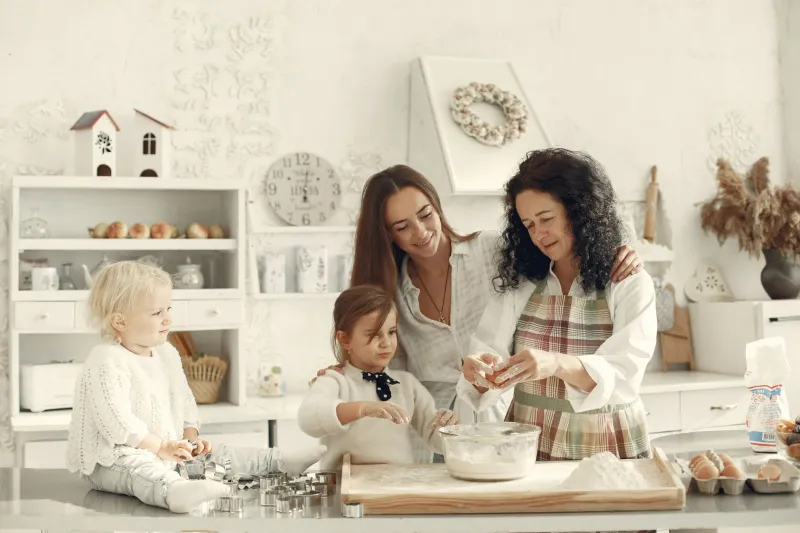
Third — and this is the one that keeps showing up in American parenting discourse without anyone naming it as Balkan — the village model. Grandparents weren't optional weekend visitors. Aunts and uncles had actual authority. Neighbors were trusted. The child was raised by a network, not just two overwhelmed adults trying to do everything themselves.
The Reddit Effect
Online parenting communities have become unlikely spaces for this kind of cultural excavation. Parents describe upbringings that sound "strict" by American standards but, on reflection, feel grounded and coherent. The responses are often wistful. I wish I'd been raised like that. My kids don't know how to be bored for five minutes.
What's interesting is that the appeal isn't really about strictness — it's about clarity. Balkan parenting, at its core, communicated something consistent: you are loved, you are capable, and you are expected to act accordingly. There wasn't much ambiguity about the rules or about the warmth underneath them.
"My parents were tough but I never doubted that they were completely in my corner," says Amra, 37, who was born in Sarajevo and raised in Minneapolis. "That combination — high expectations and total security — I think that's actually what people are looking for when they talk about 'authoritative parenting.' We just called it Tuesday."
The Tension Is Real, Too
It would be dishonest to write this without acknowledging the friction. Second-generation Balkan Americans raising kids in the US aren't simply copying their parents' playbook — they're editing it, sometimes significantly.
Some Balkan parenting patterns carried real costs. Emotional vulnerability wasn't always modeled well. Mental health conversations were often nonexistent. Gender expectations could be rigid. The village model sometimes meant everyone had an opinion and personal boundaries were a foreign concept.
"I take the good stuff," Mirela says. "The responsibility, the expectation that my kids can handle things, the extended family being involved. But I also talk to my kids about feelings in a way my mom never did with me. It's not one or the other."
Nikola puts it differently: "My dad's version of emotional support was showing up. Physically present, always. He wasn't going to sit down and ask me how I felt about something. But he was there. I'm trying to do both — be there and also actually talk."
That synthesis is probably where this conversation is most useful. Not as a nostalgic argument that the old ways were simply better, but as a reminder that American parenting culture — with all its books and podcasts and expert opinions — sometimes reinvents wheels that other cultures never stopped using.
What Gets Lost in Translation
One thing that rarely translates cleanly is the community infrastructure that made Balkan parenting work. The grandparent down the hall, the neighbors who watched you after school, the cultural events that gave the whole family a shared calendar — those aren't things you can simply import into an American suburb.
But the underlying philosophy? The idea that children are resilient, that contribution is dignity, that love doesn't require constant negotiation? That travels.
And apparently, it's traveling all the way to Reddit threads and parenting forums where people who didn't grow up Balkan are reading about it and thinking, yeah, that actually makes sense.
Baka didn't need a parenting philosophy. She just had one. Turns out the rest of us are still catching up.