Two Worlds, One Person: The Quiet Exhaustion of Being Balkan at Home and American Everywhere Else
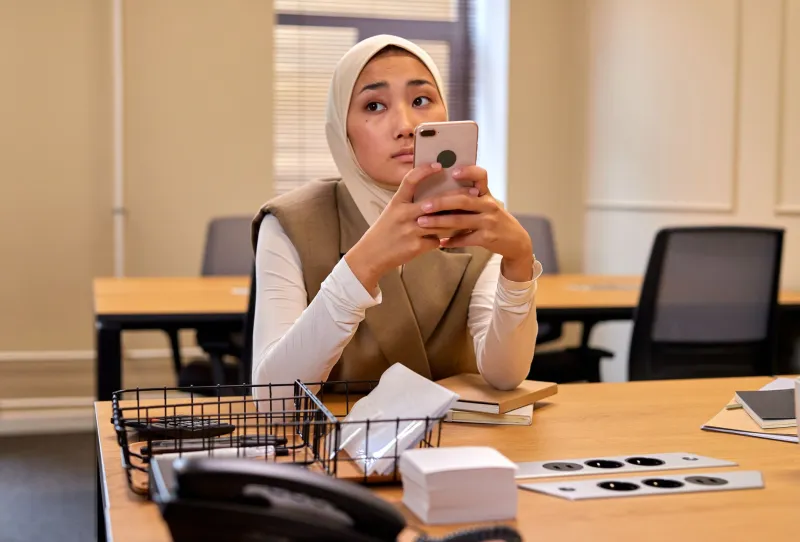
There's a specific kind of tired that doesn't show up on any wellness app. It's the kind that hits you on a Monday morning when you've just spent the entire weekend at a family gathering where you answered every question in Serbian, explained for the hundredth time why you're not married yet, and helped your baka navigate a Medicare form — and now you're sitting in a glass-walled office in downtown Chicago trying to remember which version of yourself is supposed to show up for this 9 a.m. meeting.
This is the Balkan-American experience, and it's more common — and more complicated — than most people outside these communities realize.
The Switch Nobody Talks About
Cultural code-switching is a term that's gotten a lot of attention in recent years, mostly in conversations about race and the American workplace. But the concept applies just as powerfully to immigrant and diaspora communities, including the millions of Bosnians, Serbs, Croatians, Macedonians, Albanians, and Montenegrins who've built lives across the US over the past several decades.
For the children and grandchildren of those immigrants, the switch is almost involuntary by now. You learn early that who you are at Teta Mira's house on Sunday is not who you are at school, and definitely not who you are at work. The volume changes. The gestures change. The emotional register shifts. Even your name sometimes gets quietly anglicized somewhere between the parking lot and the front door.
"I used to introduce myself as 'Alex' at work for three years," says Aleksandar, a 29-year-old software engineer in Seattle whose parents immigrated from Bosnia in the late 1990s. "My actual name isn't even that hard to pronounce. But I got tired of the pause people did when they read it on emails. The little hesitation. I just wanted to skip that part."
He's not alone. That small, almost imperceptible pause — the moment where a non-Balkan colleague registers that something sounds unfamiliar — is something many second-gen Americans describe as a daily micro-negotiation. Small on its own, but cumulative over a lifetime.
What the Research Says About the Mental Load
Dr. Milena Kovač, a clinical psychologist based in the New York area who works extensively with Eastern European diaspora communities, says the exhaustion Aleksandar describes is very real and very measurable.
"What we see in second and third-generation immigrants is a kind of chronic identity vigilance," she explains. "They're constantly monitoring — 'Am I being too much right now? Am I being too loud, too emotional, too direct?' And then they go home and the monitoring flips — 'Am I being too American? Am I forgetting where I come from?' It's a loop that doesn't have an off switch."
Kovač notes that this dual performance is often invisible to people outside the community, which makes it harder to name and address. "It's not dramatic. It's not a crisis. It's just this constant low-grade hum of managing two sets of expectations, and over time, that takes a real toll on your sense of self."
The stakes are also different depending on generation. First-generation immigrants often carried a clear sense of identity — even if they were navigating a foreign country, they knew who they were. Their children, raised between two worlds without fully belonging to either, often describe a foggier experience. Not quite American enough for their peers, not quite Balkan enough for their families.
The Family Pressure Piece
Ask any Balkan American about the family expectation side of this equation and you'll get a very specific kind of laugh. It's knowing, a little tired, and usually followed by a story.
For many in this community, the home environment carries its own performance demands — just in the opposite direction. There's pressure to maintain language fluency, to participate in traditions, to stay connected to a homeland many have never actually lived in. There's the weight of family sacrifice, the immigration story that gets invoked in moments of perceived ingratitude. There's also, frankly, a lot of love — but love that sometimes comes packaged with expectation.
"My parents came here with nothing," says Jelena, a 32-year-old marketing director in Atlanta whose family immigrated from Croatia. "And I am so proud of what they built. But there's also this unspoken thing where my success is supposed to look a specific way. The career, the husband, the house in a good neighborhood. And then I'm at work trying to be this independent, boundary-setting professional. Those two versions of me don't always talk to each other."
Community leaders in Balkan diaspora organizations across the country say this tension is one of the most consistent themes they hear from younger members. The desire to honor heritage without being consumed by it. The need to build an identity that is genuinely theirs.
The Authentic Identity Movement Gaining Ground
Here's where things get interesting, though: something is shifting.
Across diaspora communities, there's a growing movement — informal, leaderless, mostly playing out on social media and in conversation — toward what you might call radical cultural honesty. Young Balkan Americans are increasingly refusing to flatten themselves for anyone's comfort, in either direction.
You see it in the content creators who make videos entirely in code-switched Bosnian-English, not explaining the jokes, not providing subtitles. You see it in the professionals who've quietly gone back to using their real names. You see it in the dinner conversations where someone finally says, out loud, that they don't actually want to move back to the neighborhood where all the cousins live.
"My generation is kind of done apologizing for being complicated," says Aleksandar, who — for the record — now goes by his full name at work. "I'm Bosnian and I'm American and those things don't cancel each other out. I just had to stop waiting for other people to figure that out before I believed it myself."
Dr. Kovač sees this shift in her practice too, and she's cautiously optimistic. "What I'm noticing is that people are starting to grieve the parts of themselves they suppressed, and then reclaim them. That's real psychological work. It's not easy, but it's healthy."
So What Does It Actually Look Like to Stop Switching?
There's no clean answer here — and honestly, anyone who tells you there is probably hasn't spent a Sunday afternoon explaining American tax brackets to their uncle while also mentally prepping for a Tuesday board presentation.
But the first step, according to both the therapists and the young professionals who are figuring this out in real time, seems to be naming the thing. Recognizing that the exhaustion is real, that the performance is real, and that the version of yourself that exists somewhere between Sarajevo and Seattle is not a compromise — it's actually the whole point.
Being Balkan in America was never going to be simple. But maybe it was never supposed to be one thing, either.
And maybe that's exactly what makes it worth talking about.