Dollar by Dollar: How Balkan Americans Are Accidentally Bankrolling a Homegrown Cultural Boom
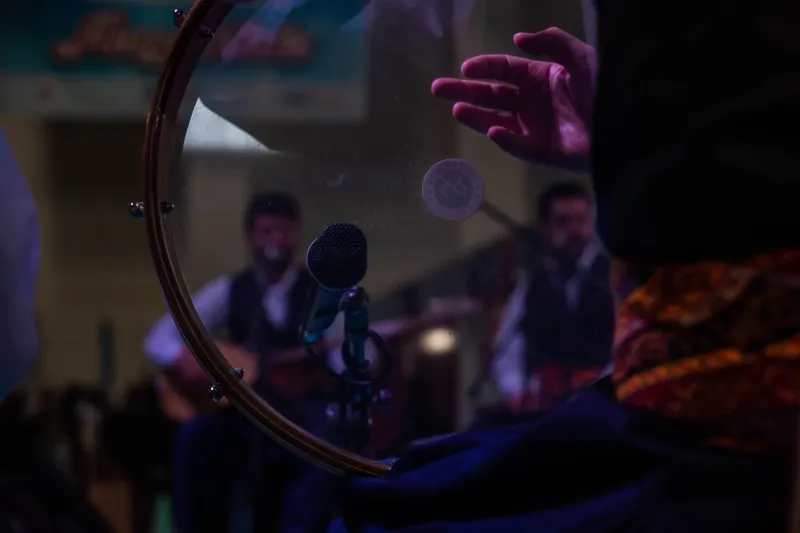
Mira Hadžić didn't think of herself as a patron of the arts. She's a nurse in Cincinnati, working double shifts, sending $400 home to her parents in Sarajevo every couple of months. But when her younger brother used some of that money to help fund a small music festival in their hometown neighborhood last summer — the kind with local sevdah singers and an outdoor stage cobbled together from borrowed equipment — something clicked.
"I didn't even know he was doing it at first," she says, laughing. "He told me after the fact. I was kind of annoyed, and then I saw the photos and I cried."
Mira's story isn't unique. Across the Balkan diaspora in the United States, a quiet, largely undocumented phenomenon is playing out: remittance money — the billions of dollars sent annually by immigrants back to their home countries — is trickling into cultural projects in ways that economists and cultural observers are only beginning to track. And the results are genuinely surprising.
The Numbers Behind the Vibe
The World Bank estimates that remittances to Western Balkan countries — Bosnia and Herzegovina, Serbia, North Macedonia, Montenegro, Albania, and Kosovo — have grown steadily over the past decade, with the region receiving billions annually from diaspora communities worldwide. The US-based Balkan community represents a significant slice of that flow.
Most of that money goes to the expected places: rent, groceries, medical bills, home repairs. But economists who study diaspora economics say a meaningful portion — harder to quantify but increasingly visible — ends up seeding small businesses, creative ventures, and cultural infrastructure.
"Remittances are often framed purely as a poverty-alleviation tool," says one economist who has studied migration patterns in the former Yugoslav space. "But in middle-income economies like Serbia or Bosnia, where basic needs are largely met for much of the population, that extra cash from abroad often gets channeled into aspirational spending — and that includes culture."
Translation: when your cousin in Belgrade already has a roof over their head and food on the table, the $200 you send for their birthday might just fund their first short film.
The Accidental Patrons
Second-generation Balkan Americans are particularly interesting in this equation. Many of them grew up watching their parents wire money home with a sense of obligation — a duty to family that didn't always feel glamorous. But as they've gotten older and more financially stable, some have started to think more intentionally about what that money does.
Darko Petrović, 34, grew up in the Chicago suburb of Skokie, Illinois, the son of Serbian immigrants. He works in tech and sends money home regularly, but a few years ago he started earmarking some of it specifically for his cousin's theater company in Novi Sad.
"It started as, like, 'here's some cash for your project,' very casual," Darko says. "But now it's become this real thing. They did a production last spring that toured three cities. I went to see it. I flew to Serbia specifically to see a play that I helped pay for. That's wild to me."
He pauses. "My parents sent money so the family could eat. I'm sending money so my cousin can put on Chekhov in Vojvodina. The Balkans are different now."
What's Being Built
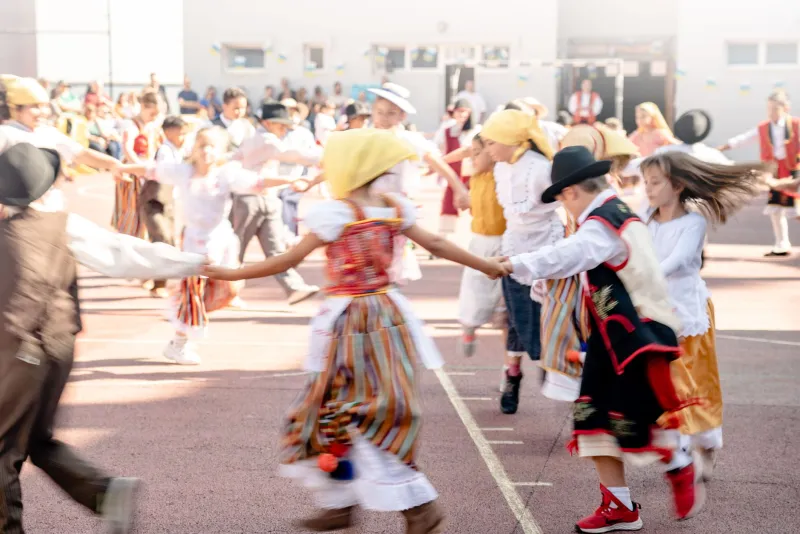
The cultural projects being funded — even partially — by diaspora dollars span a wide range. In Belgrade, several indie theater companies have quietly benefited from abroad-based donors, many of whom are simply family members who believe in what's being made. In Sarajevo, folk music festivals that might have withered without institutional support have found lifelines through crowdfunding campaigns that disproportionately draw from diaspora communities in the US, Germany, and Austria.
In Kosovo, a new wave of visual artists and documentary filmmakers has emerged, some of them explicitly crediting family support from the US as the reason they didn't have to leave to pursue their work.
That last point matters enormously. One of the most damaging effects of economic migration on Balkan countries has been brain drain — the departure of educated, creative young people who see no future at home. Remittances, when they reach cultural entrepreneurs, can flip that script.
"If I know my sister in New York has my back financially, I can afford to take a risk here," says one Sarajevo-based musician who asked to remain anonymous. "I don't have to move to pursue music. I can build something here, for here."
The Tension Nobody Talks About
It's not all heartwarming, of course. There's a complicated power dynamic embedded in this whole arrangement that deserves some honesty.
When diaspora money funds cultural projects back home, it can sometimes come with invisible strings — expectations about what kind of culture gets made, what audiences it should serve, or whether it should feel familiar to people who left rather than relevant to people who stayed. The Balkan American who funds a folk music festival might have very different ideas about authenticity than the twenty-two-year-old in Sarajevo who wants to experiment with electronic production.
Mira, the nurse from Cincinnati, admits she thinks about this. "I don't want to be the person who funds nostalgia," she says. "I want to fund whatever is actually alive there now. But I also don't always know what that is. I've been here since I was nine."
That gap — between the culture diaspora members carry in their memories and the culture that's actually evolving on the ground — is real. The most successful diaspora-funded projects seem to be the ones where the relationship is genuinely collaborative, where the person sending the money trusts the person receiving it to make the creative calls.
Something Bigger Than a Wire Transfer
What makes this story compelling, beyond the economics, is what it says about identity. Balkan Americans are often caught between two gravitational pulls — fully assimilating into American life or holding tight to roots that can start to feel abstract the longer you're away. Funding culture back home is, for many, a way of resolving that tension without having to choose a side.
Darko, reflecting on his cousin's theater company, puts it simply: "When I watch one of their shows, I feel like I'm part of something that's still happening. Not something frozen in 1995, not something I only see at my parents' house. Something that's moving."
Mira agrees, in her own way. She's already told her brother she wants to help fund next summer's festival — this time, she knew from the beginning.
"I'm a nurse," she says. "I help people heal for a living. If I can also help something beautiful exist in the world, why wouldn't I?"
Why wouldn't you, indeed.