Why Balkan Americans Are Ghosting the Apps and Letting Grandma Set Them Up Instead
Somewhere between the third unanswered Hinge message and the fourth "we should hang out sometime" that led absolutely nowhere, Milena Đorđić, a 28-year-old graphic designer from Chicago, made a decision. She deleted her dating apps. All of them. And she called her mom.
"I told her, fine. You win. Tell your friends I'm looking."
Within three weeks, Milena had been introduced to two men through her mother's church circle and her aunt's neighbor's son. She's now six months into a relationship with one of them. "It's almost embarrassing how well it worked," she laughs. "But also — why did I wait so long?"
Milena isn't alone. Across Balkan American communities in cities like Chicago, Cleveland, St. Louis, and parts of the Pacific Northwest, a quiet but deliberate shift is happening. Young adults who grew up straddling two cultures — one foot in Balkan tradition, one foot in American independence — are increasingly turning back toward community-based matchmaking, family introductions, and what one dating coach called "structured social accountability." And the mainstream dating world, drowning in app fatigue and commitment phobia, is slowly catching on.
The App Economy Is Broken and Everyone Knows It
Let's be honest: the data on dating apps is not flattering. Studies consistently show that the majority of app users report higher rates of anxiety, lower self-esteem, and — critically — fewer actual relationships formed compared to people who meet through social networks. The gamification of attraction has turned finding a partner into something that feels more like scrolling Amazon than building a life with someone.
For Balkan Americans, this disconnect hits differently. Many grew up watching their parents and grandparents operate within a social ecosystem where everyone knew everyone, where a potential partner's entire character could be quietly vetted through three phone calls and a Sunday coffee, and where the community itself functioned as a kind of distributed matchmaking algorithm — one with a much better success rate than Tinder.
"In my family, you didn't just date someone," says Bojan Petrović, 31, a software engineer from Cleveland whose parents emigrated from Bosnia in the late 1990s. "You were introduced. There was context. You knew something about this person before you ever sat across from them. That context matters. It changes how you show up."
The Mechanics of Community Matchmaking
So what does Balkan-style matchmaking actually look like in an American context? It's less formal than it sounds — and more effective than most people expect.
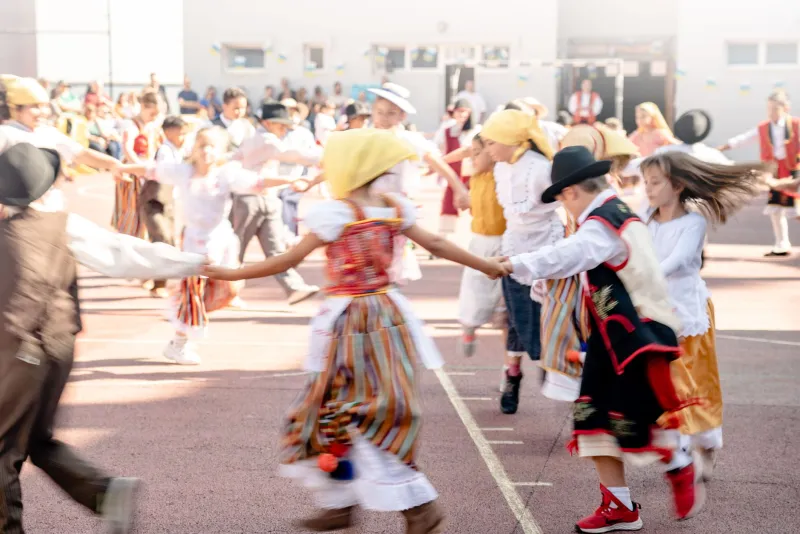
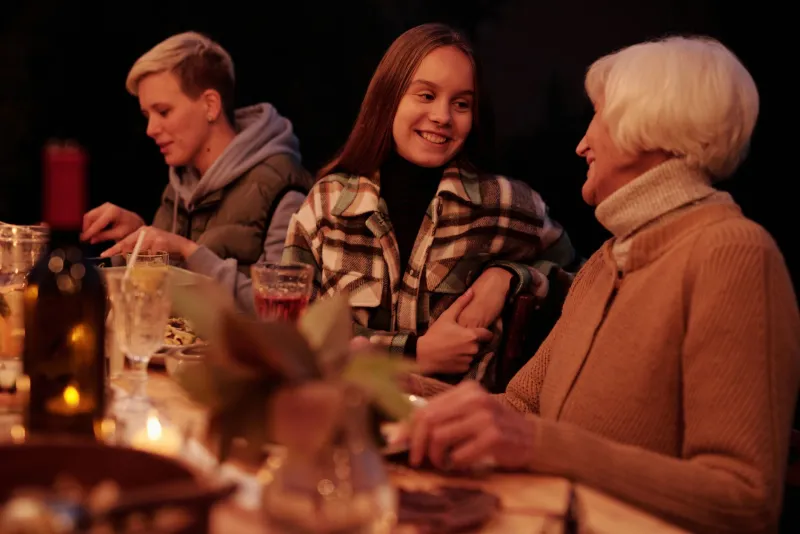
It often starts at community gatherings: church events, cultural festivals, diaspora association dinners, or the ever-reliable extended family lunch that somehow always includes "a cousin you haven't met yet." Parents, aunts, and family friends function as informal scouts, quietly noting who's single, who's settled, who has good character, and who their own kid might actually like.
Sonja Marković, a Chicago-based life coach who works extensively with second-generation Balkan Americans, describes it as "reputation-based dating." "When someone is introduced through family or community, there's already a layer of social trust built in," she explains. "You're not starting from zero with a stranger from the internet. You're starting with a reference. That changes the entire dynamic."
Group settings also play a major role. Rather than the high-stakes pressure of a one-on-one first date with a stranger, initial meetings often happen in casual group environments — a dinner party, a backyard gathering, a community event. The pressure is lower. The observation period is longer. And crucially, both people have a chance to show up as themselves rather than performing for an audience of one.
The Tension Is Real — But So Is the Payoff
None of this is without friction. The same community structures that create warmth and accountability can also carry expectations that feel suffocating, particularly for Balkan American women who've grown up with strong ideas about their own autonomy.
"I love my family. I also need them to understand that I'm choosing my own life," says Anja Kovačević, 26, a nurse in St. Louis whose parents emigrated from Croatia. "There's a difference between appreciating an introduction and feeling like your entire love life is a community project."
Anja has found a middle path that many young Balkan Americans describe: accepting introductions while maintaining clear boundaries about pace and decision-making. "I'll meet whoever my mom thinks is great. I'll give it a real chance. But I'm the one deciding if it goes anywhere. Once my family understood that, the whole thing became a lot less stressful."
Dating coach Dragan Ilić, who runs a practice in the New York metro area serving a largely immigrant and second-generation clientele, says this negotiation is actually healthy. "The best outcomes I see are when people take the warmth and social infrastructure of their culture and combine it with the personal agency that American life has given them. It's not either/or. It's both."
Mainstream Dating Culture Is Taking Notes
Here's where it gets interesting: what Balkan communities have been doing for generations is starting to look a lot like the cutting edge of Western dating advice.
Slow dating. Intentional courtship. Meeting through trusted social circles rather than cold digital contact. Prioritizing character over chemistry in early stages. These are concepts that are now being packaged and sold by high-end matchmaking services, relationship therapists, and dating coaches across the US — often at significant cost — to people who have no idea these ideas have been standard operating procedure in communities like theirs for decades.
"I've had American clients pay thousands of dollars to learn what my mom figured out by instinct," Sonja Marković says, with a laugh that contains equal parts amusement and exasperation.
Some dating apps are even trying to adapt. Features built around shared social connections, community-based verification, and "warm introduction" mechanics are appearing more frequently as platforms scramble to differentiate themselves from the swipe-and-ghost fatigue that's driving users away.
Whether those digital versions can replicate what happens organically in a tight-knit community is another question entirely. There's something about the physical presence of people who actually know you — who will see you at the next gathering regardless of how the date went — that creates a kind of accountability no algorithm has managed to engineer yet.
What the Apps Still Can't Buy
Milena Đorđić, back in Chicago, has thought about this a lot since her own unexpected U-turn into community matchmaking territory. "The apps give you options," she says. "But options aren't the same as context. They're not the same as knowing that this person grew up around people who have values you recognize. That's not nothing. That's actually a lot."
Her boyfriend, for the record, had no idea her mother had been quietly engineering their meeting for weeks before it happened. She told him eventually. He thought it was funny. His own mother had apparently been doing the same thing from her end.
"So in a way," Milena says, "our moms matched us. And you know what? Good for them."