Burek, Bosanski Lonac, and Belonging: How Balkan Food Found Its Place at the American Table
The Smell of Home, Served to Strangers
Dragan Petrović has been making burek the same way his grandmother taught him since he was nine years old. The technique hasn't changed: hand-stretched phyllo dough, the specific ratio of fat to filling, the particular patience required to get the layers right. What has changed is where he's making it — specifically, a small restaurant in Chicago's Logan Square neighborhood, where the line on weekend mornings has been known to stretch out the door.
"People come in and they've never had it before," he says, wiping flour from his hands between batches. "They take a bite and their eyes go wide. That look — I live for that look."
Dragan came to Chicago from Banja Luka twenty years ago. For most of that time, he cooked Balkan food at home, for family, for friends, for the small circle of people who already knew what they were getting. Opening a restaurant felt risky. It felt like asking a city that didn't know his food to trust him.
The city, it turns out, was ready.
A Cuisine That's Been Hiding in Plain Sight
Balkan food has existed in American cities for decades, sustained quietly by diaspora communities in places like Chicago, St. Louis, Denver, and parts of New York. Burek shops and Balkan grills have served their communities without much fanfare, which is to say without much attention from the food media ecosystem that decides what becomes a "trend."
That's changing. A combination of factors — increased interest in global cuisines, a food media landscape actively looking beyond its traditional Eurocentric comfort zone, and a new generation of Balkan-American chefs willing to put their heritage front and center — has pushed this cuisine into a broader spotlight.
Food publications that once wouldn't have known what ćevapi were are now running features on the best spots to find them. Ajvar — the roasted red pepper and eggplant relish that functions as a condiment, a spread, and a way of life in much of the Balkans — has started appearing on charcuterie boards at restaurants that have no particular connection to the region. It's that good.
The Dishes Leading the Way
For the uninitiated, a quick tour of what's capturing American palates.
Ćevapi are small, skinless grilled sausages made from a mixture of minced meats — typically beef and lamb — seasoned with garlic, paprika, and other spices that vary by region and by family. They're served with flatbread, raw onion, and kajmak (a rich, slightly tangy dairy spread that has no perfect American equivalent). They are, to put it simply, one of the best things you can eat with your hands.
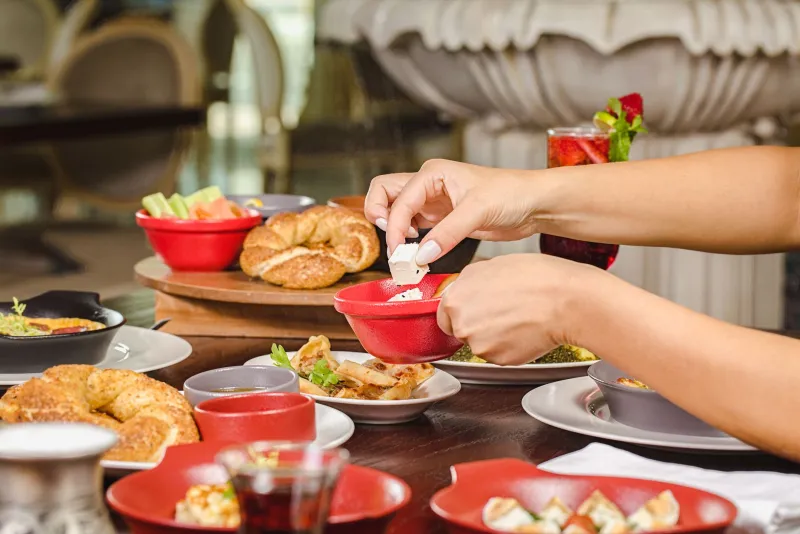
Burek is the flaky, layered pastry that Dragan has been perfecting his whole life. It comes filled with meat, cheese, spinach, or potato, and it functions equally well as breakfast, lunch, or a 2 a.m. decision you won't regret. It is comfort food in the most literal sense — the kind of thing that makes people feel held.
Bosanski lonac (Bosnian pot) is a slow-cooked stew of layered vegetables and meat that requires time and patience and rewards both generously. It's the kind of dish that doesn't photograph dramatically but tastes like someone's been thinking about you all day.
Pita, sarma, musaka — the Balkan versions of stuffed dishes and layered casseroles that have their own distinct character, shaped by Ottoman influence, Mediterranean ingredients, and the particular ingenuity of mountain and riverside communities that made extraordinary food from simple ingredients.
The Chefs Telling the Story
Amra Husić runs a catering operation in Denver that has recently expanded into a small restaurant space, and she talks about her food with the kind of precision and passion that makes you want to eat immediately.
"Every dish I make has a story attached to it," she says. "My sarma — that's my mother's recipe. My baklava — that's a technique I learned from a woman in Mostar who had been making it for sixty years. When I serve these things, I'm not just serving food. I'm serving those people. I'm serving that history."
For Amra, and for many Balkan immigrant chefs, cooking is also an act of resistance — a refusal to let the particular flavors and techniques of their homelands dissolve into the generic. The wars that reshaped the Balkans in the 1990s created waves of displacement and loss. Food became one of the most tangible ways to hold onto what remained.
"You can lose your house," she says quietly. "You can lose your city. But if you know how to make the food — really know it, in your hands — you carry it with you."
What American Diners Are Finding
The American food audience is in an interesting place right now. There's genuine appetite — no pun intended — for cuisines that haven't been over-exposed, that still carry the element of discovery. Balkan food fills that space in a particular way because it manages to feel both familiar and completely new.
The flavor profiles draw on Mediterranean ingredients that American palates know — olive oil, peppers, eggplant, lamb — but the combinations and techniques produce something that doesn't taste like anything else. It's hearty without being heavy. It's rich without being excessive. And the hospitality culture around it — the expectation that guests will be fed generously, insistently, and with love — translates beautifully to a restaurant context.
"People come in once and they come back," says Dragan. "That's how I know it's working. Not the reviews, not the Instagram posts. The people who come back."
A Table Big Enough for Everyone
What's most striking about the rise of Balkan food in America isn't just the food itself — it's what happens around the table. These restaurants and home kitchens are functioning as genuine cultural bridges, places where diaspora communities find recognition and where curious outsiders find an entry point into a part of the world they might otherwise never encounter.
Food has always done this work. It's arguably the most accessible form of cultural exchange — you don't need to speak the language, you don't need to know the history, you just need to be willing to take a bite.
American diners are taking the bite. And they're asking for seconds.