Ditch the Soft Approach: Why Gen Z Is Booking Therapists With Balkan Accents
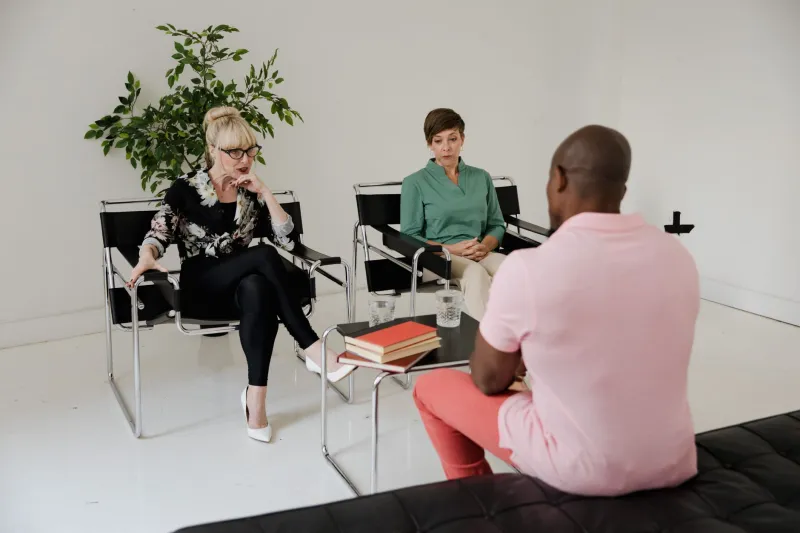
Somewhere between the fifth therapist who told her to "hold space for her feelings" and the sixth who suggested she "honor her inner child," Mia, a 24-year-old grad student in Chicago, snapped. Not in a crisis kind of way. More like the quiet snap of someone who realizes they've been eating flavorless food for years and finally want something with a little heat.
She found Dr. Vesna through a friend's recommendation — a licensed clinical social worker originally from Sarajevo, now practicing on the North Side. The first session, Vesna looked at Mia's carefully typed list of anxieties and said, plainly, "Some of these things you cannot control. So why are you spending so much energy on them?"
Mia laughed. Then cried. Then booked her next six sessions.
"It wasn't mean," Mia told us. "It was just... real. Like talking to someone who actually believed I could handle the truth."
The Wellness Industrial Complex Has a Softness Problem
American therapy culture has spent decades — rightly — dismantling stigma, building safe language, and creating frameworks that center the client's emotional experience. That work matters. But somewhere along the way, a growing number of young people feel like the pendulum swung too far into a kind of therapeutic bubble wrap.
TikTok is flooded with therapy-speak. "That's a trauma response." "You need to set a boundary." "Your feelings are valid." All technically true, but increasingly deployed as conversation enders rather than conversation starters. For Gen Z, who grew up watching authenticity get commodified in real time, the polished language of mainstream wellness can feel like just another performance.
Enter the Balkan therapist.
Practitioners with roots in Serbia, Bosnia, Croatia, North Macedonia, and surrounding countries are increasingly being sought out — not just by diaspora communities, but by young Americans with no Balkan connection at all — for what clients describe as a fundamentally different emotional register. Direct. Warm but unsentimental. Grounded in a cultural tradition that never really pathologized ordinary human struggle in the first place.
Directness Is Not the Same as Coldness
It's worth being precise here, because the Balkan communication style gets misread constantly. Bluntness in a Balkan context doesn't come from indifference — it comes from a deep cultural assumption that the person in front of you is capable. That they can handle the truth. That softening reality too much is, in its own way, a form of disrespect.
Dr. Milena Radović, a psychotherapist based in New York who emigrated from Belgrade in her twenties, describes it this way: "Back home, we don't have the same tradition of talking around things. If someone you love is making a bad decision, you tell them. Not to hurt them — because you believe in them enough to be honest."
She's noticed a specific kind of client finding her practice lately: young Americans who've been in therapy before, who understand the language of mental health, but who feel like their previous sessions circled the same topics endlessly without ever landing anywhere useful.
"They come in and they say, 'I just want someone to tell me what they actually think,'" she says. "And I do. Carefully, with context — but I do."
Cultural Baggage as Clinical Asset
There's something else happening beneath the surface of this trend, and it's worth sitting with. Balkan therapists often bring a lived relationship with collective trauma, economic instability, displacement, and survival that shapes how they understand human resilience. The 1990s wars, the economic collapses, the waves of emigration — these aren't just historical footnotes for practitioners who grew up in their shadow. They're part of a worldview.
That worldview tends to be less pathology-focused. Suffering, in many Balkan cultural frameworks, is understood as part of life — not something to be eliminated, but something to be moved through with community, humor, and stubbornness. Therapy from that vantage point looks less like a rescue operation and more like a coaching relationship between two adults.
For Gen Z, a generation that's been simultaneously over-diagnosed and under-supported, that framing hits differently.
"My Balkan therapist doesn't treat me like I'm fragile," says Jordan, a 26-year-old in Seattle who found his current therapist — originally from Skopje — through a Reddit thread specifically recommending Eastern European practitioners. "She treats me like I'm a person going through something hard. There's a difference."
The Search Is Getting Specific
Online mental health directories have noticed the shift. Psychology Today profiles are increasingly including cultural background as a searchable filter, and anecdotal reports from practitioners suggest that "Eastern European" and "Balkan" are terms clients are actively typing into search bars.
Facebook groups for Balkan diaspora communities in cities like New York, Chicago, and Los Angeles regularly field requests from non-Balkan Americans asking for therapist referrals. The reasoning in those posts is remarkably consistent: they want someone who won't over-validate them, who will push back, who brings something culturally different to the room.
It's a strange and interesting compliment — the communication style that Balkan immigrants were sometimes told to soften in professional American settings is now being specifically requested.
What This Doesn't Mean
To be fair: no single cultural background makes a good therapist. Training, ethics, individual personality, and genuine clinical skill matter enormously. There are warm, direct American therapists and there are Balkan practitioners who miss the mark. Cultural background is a flavor, not a guarantee.
And some mental health professionals in the Balkan diaspora community push back gently on the romanticization. "People sometimes idealize the directness without understanding that it can also go wrong," says one therapist who asked to remain anonymous. "Directness without empathy is just harshness. The goal is both."
Fair point. But the underlying hunger that's driving this trend — for authenticity, for a therapeutic relationship that feels like two real people in a room rather than a scripted wellness transaction — that's worth taking seriously.
Mia is still seeing Dr. Vesna. Six months in, she says she's made more actual progress than in two years of previous therapy combined.
"She told me once, 'You already know what you need to do. You just want permission.' And she was right," Mia says. "I didn't need more validation. I needed someone to believe I could figure it out."
Sometimes the most healing thing in the room is just someone who tells you the truth — with a Sarajevo accent and absolutely zero apology for it.