Loving a Place You've Never Actually Been: The Inherited Homesickness of Gen Z Balkan Americans
She was born in Ohio. She's never spent more than three weeks in Bosnia. But when Amra hears certain songs — the kind her mother played on Sunday mornings while making pita — something happens that she's never quite been able to explain.
"It's not sadness exactly," she says. "It's more like missing something I never had. Which doesn't make sense. But it's completely real."
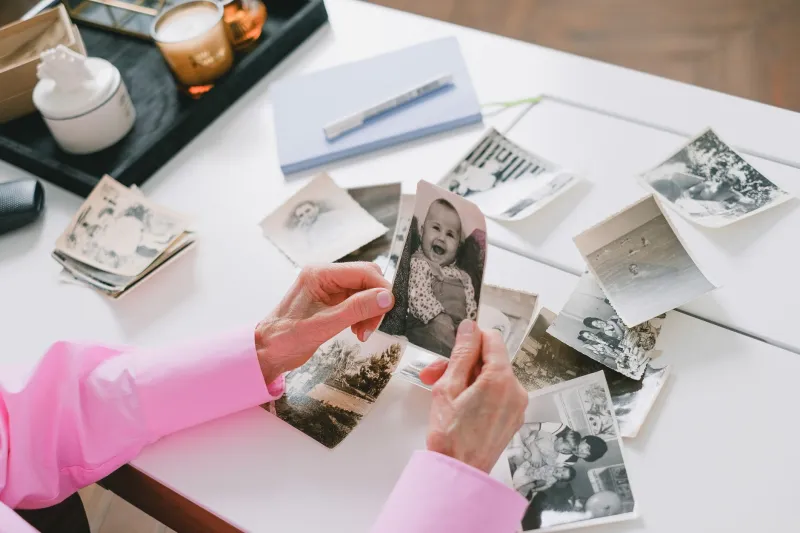
Amra is 24, works in graphic design, and describes herself as obsessively curious about a country she knows primarily through family stories, YouTube videos, and a rotating collection of her parents' photographs. She's not unusual. Among second-generation Balkan Americans — particularly Gen Z — this particular emotional experience is common enough to have become a kind of generational signature.
Call it inherited homesickness. Call it nostalgija by proxy. Whatever the name, it's shaping how a generation understands themselves, their families, and a place they love with a ferocity that sometimes surprises even them.
The Archive You Grow Up Inside
For children of Balkan immigrants, the homeland is never fully absent. It arrives constantly — in food, in language, in the particular way your parents react to news from back home, in the photographs on the refrigerator, in the relatives who call on birthdays and speak too fast for you to follow.
You don't experience that homeland directly. You experience it filtered through your parents' grief, their pride, their selective memory, their desire to preserve something across an ocean. And because children are absorptive creatures, you take all of it in and build something from it — a version of a place that is partly real and partly constructed.
That construction is vivid. It tends to be beautiful. And it tends to be incomplete in ways that only become apparent when you're old enough to notice the gaps.
"My mom talked about her hometown like it was paradise," says Nikola, a 21-year-old Serbian American in New Jersey. "The river, the summers, the neighbors, the food. I built this whole picture. Then I went there at 18 and it was... real. Like, actually a real place with traffic and concrete and people having bad days. I loved it. But it wasn't the place I'd been living in my head."
The Emotional Architecture of Inherited Trauma
Psychologists who work with immigrant communities have a name for some of what's happening here. Intergenerational transmission of trauma — the process by which the emotional residue of displacement, war, or loss moves from one generation to the next without being fully named — is well-documented in communities that have experienced collective upheaval.
Balkan Americans whose parents fled the conflicts of the 1990s carry something specific: not just the general immigrant experience of cultural dislocation, but a grief shaped by violence, abrupt departure, and the particular pain of a country that fractured while people were still living in it.
That grief doesn't disappear in the next generation. It transforms. Sometimes it becomes anxiety. Sometimes it becomes an intense, protective love for a culture. Sometimes it becomes the specific ache of nostalgija — a longing for something that was lost before you were old enough to hold it.
"I think about my parents' stories and I feel this thing in my chest," says one 23-year-old Bosnian American in Chicago. "Like I personally lost something. Which is confusing because I was three when we left. But the loss is real. I don't know whose it is exactly."
The TikTok Homeland
Here's where it gets contemporary. Gen Z Balkan Americans are also constructing their relationship to the homeland through media — and increasingly, through the particular kind of curated, aestheticized content that social platforms produce.
TikTok and Instagram have made it possible to consume a vivid, beautiful, highly selective version of Balkan life without leaving your apartment. Cobblestone streets at golden hour. Grandmothers in gardens. Kafanas that look like film sets. Folk music remixed over lifestyle content.
This isn't dishonest exactly — those things are real. But it is incomplete in the way that all curated content is incomplete. The algorithm doesn't serve you the complicated parts: the economic frustration, the political dysfunction, the brain drain, the young people there who are desperately trying to leave.
The result is a version of the homeland that is partly lived experience, partly family memory, partly cinematic construction, and partly algorithmic feed. It's not false. But it's also not the whole picture.
"I know I'm romanticizing it," admits one 26-year-old Croatian American in Los Angeles who runs a social media account dedicated to Croatian culture. "I know my cousins who actually live there have a totally different experience. But I can't help it. Something in me needs this version to be true."
When the Fantasy Meets the Reality
For many Gen Z Balkan Americans, the moment of reckoning comes during an extended visit — not the brief summer trips of childhood, but a real stay, long enough to see past the surface.
Those trips are almost universally described as profound and disorienting in equal measure. The food is exactly as good as advertised. The warmth of extended family is real. But so is the complexity — the political conversations that reveal uncomfortable things, the infrastructure gaps, the sense that the country is struggling with problems that your parents' nostalgic version never mentioned.
The reaction to that dissonance varies. Some people feel disappointed, then guilty about the disappointment. Some feel a deeper, more textured love that survives contact with reality. Some come back to America feeling more American than they expected, which produces its own particular grief.
"I thought going would cure the longing," says Amra. "It didn't. If anything, it made it more complicated. Now I miss the real place and the imagined place at the same time. That's a lot to carry."
What You Do With a Love Like That
The inherited nostalgia of Gen Z Balkan Americans isn't a pathology. It's a response to a genuinely complicated emotional inheritance — the attempt to hold onto something your family lost, to honor a history you didn't live through, to locate yourself in a lineage that stretches across an ocean and a generation.
What it requires, eventually, is a kind of honest renegotiation. Not abandoning the love — that would be its own loss — but allowing the real place to exist alongside the imagined one. Letting the homeland be complicated and imperfect without loving it any less.
That's harder than it sounds. But it's also more sustainable than chasing a version of home that only lives in photographs and Sunday morning songs.
The longing doesn't go away. It just gets more honest. And maybe that's enough.