Strong Coffee, Stronger Opinions: The Kafana as America's Most Honest Political Forum
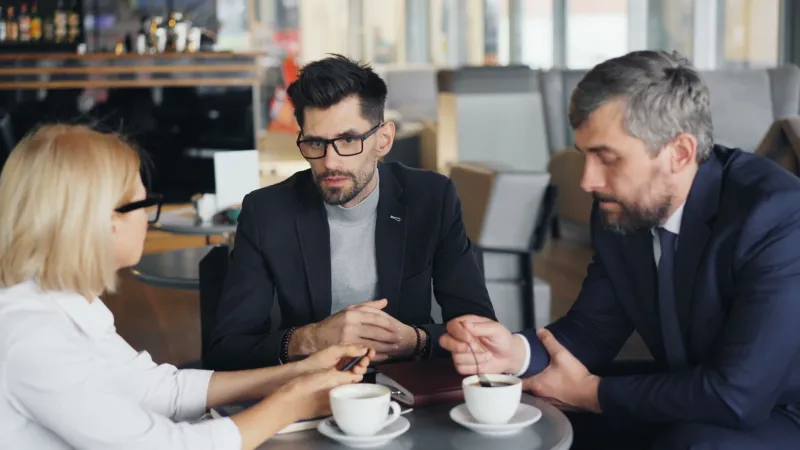
The scene is familiar if you know where to look. A dim room, mismatched chairs, a coffee that arrives without a size option or a name written on the cup. Someone's grandfather is holding court at the corner table. A younger guy is gesturing emphatically at a newspaper. Two women near the window are dissecting local politics with the kind of precision that would embarrass most cable news panels.
This is the kafana — and in American cities with significant Balkan populations, it has quietly become something that civic engagement researchers have been struggling to manufacture for decades: a real, in-person space where people talk about politics without performing for an algorithm.
Old World Furniture, New World Problems
The kafana as a concept is ancient by American standards. These gathering spaces — part café, part social club, part neighborhood institution — have been the backbones of public life across Bosnia, Serbia, Croatia, North Macedonia, and beyond for centuries. They're where news traveled before newspapers, where deals got made before boardrooms, where grief got processed before therapy was a thing.
What nobody predicted was how well that model would translate to 21st-century America — or how urgently people would need it.
In a media environment defined by algorithmic echo chambers, outrage optimization, and the relentless pressure to perform your politics online, the kafana offers something almost radical: a room full of people who disagree with each other and haven't logged off yet.
"At home — I mean in Bosnia — the kafana was never about agreeing," explains a Sarajevo-born community organizer now based in St. Louis. "You go to argue. You go to hear what the other guy thinks. You go to be annoyed and then buy him a coffee anyway. That's the whole point."
Who's Actually Showing Up
Here's what's shifted in the last few years: it's not just Balkan Americans filling these spaces anymore.
In cities like Chicago, Detroit, and parts of New Jersey where kafana culture has taken root, a growing number of non-Balkan Americans — many of them younger, politically engaged, and deeply fatigued by digital discourse — have started showing up. Sometimes they come with a Balkan friend. Sometimes they just wander in because the coffee smells good and they stay for three hours.
What they find tends to disarm them a little. The conversation is blunt. Nobody's workshopping their messaging. People interrupt each other, contradict themselves, change their minds mid-sentence, and then argue about something completely different. It's messy and alive in a way that most structured civic engagement events simply aren't.
"I went to a city council forum last year and left feeling like I'd watched a press release get performed at me," says one Chicago resident in her early thirties who now regularly attends what she calls "the Serbian coffee spot" near her apartment. "Here, I leave feeling like I actually heard something real. Even when I think everyone's wrong."
The Political Texture of Kafana Conversation
It would be too simple to call kafana political culture progressive or conservative. It's neither, and that's genuinely part of its appeal.
Balkan political sensibility is shaped by a history that doesn't map cleanly onto American party lines. People who lived through socialism, nationalism, war, and economic collapse tend to have complicated, unruly views that resist easy categorization. A single table might hold someone who distrusts government intervention on principle, someone else who thinks the American healthcare system is a moral failure, and a third person who's skeptical of both positions and says so loudly.
That ideological texture makes for uncomfortable conversations sometimes. It also makes for honest ones.
American political culture has become increasingly sorted — geographically, socially, digitally. People self-select into information environments that confirm what they already believe. The kafana, with its mixed generational and ideological composition, operates almost as a corrective. You can't mute someone who's sitting three feet away from you.
Civic Engagement, the Analogue Way
Some Balkan American community organizations have started formalizing what was previously organic. In several cities, kafana-adjacent spaces now host informal civic nights — not town halls exactly, more like structured versions of what was already happening. Local candidates drop in. Neighborhood issues get aired. Occasionally, something actually changes.
A community organizer in Milwaukee described hosting a discussion about a proposed zoning change that drew more genuine engagement than the official public comment period. "People talked for four hours. They disagreed. They came back the next week and kept talking. Two of them ended up testifying at the city meeting. That doesn't happen at a Zoom webinar."
There's something here that urban planners and civic designers have been circling for years: the idea that physical, informal, low-stakes gathering spaces are essential infrastructure for healthy democratic culture. The kafana didn't set out to prove that thesis. It just kept existing, and eventually America caught up to what it already knew.
The Cigarette Elephant in the Room
Let's be honest about one thing: the classic kafana experience involves cigarettes, and American indoor smoking laws have required some creative adaptation. Some spaces have moved the smoking component outside entirely. Others operate in states with more permissive rules. A few have shifted the cultural association — the cigarette was always more about the ritual pause, the excuse to linger, than the nicotine itself — and substituted long coffee refills and unhurried conversation.
The vibe survives the adjustment. The point was never really the cigarette. The point was the permission to stay, to be present, to not rush toward anything.
Why This Matters Beyond the Community
American democracy has a loneliness problem. Not just socially — politically. People feel increasingly isolated in their political lives, performing beliefs online for audiences they've never met while having fewer and fewer genuine exchanges with people who think differently.
The kafana doesn't solve that. But it models something important: that political conversation can happen in person, without moderation, without a predetermined outcome, and without everyone needing to leave feeling validated.
Sometimes you leave annoyed. Sometimes you leave having actually changed your mind about something small. Sometimes you leave having made a friend you never expected.
That's not a bad return on a cup of coffee.