Čekaj, Is That Turbo-Folk on My TikTok? How Balkan Beats Conquered Gen Z America
The Sound You Can't Place — But Can't Stop Playing
It usually starts the same way. You're scrolling TikTok, the algorithm drops something into your feed, and suddenly there's this track playing that you've never heard before. The production is massive — like, genuinely overwhelming. There's a synthesizer doing something that sounds like it's from the '90s but also from the future. A woman is singing in a language you definitely don't speak, but the melody hooks you somewhere deep and instinctual. You check the comments. Half of them are in Serbian. The other half are Americans typing "what IS this" in increasing desperation.
Congratulations. You've just discovered turbo-folk. Or maybe Balkan trap. Or perhaps some hybrid that doesn't have a name yet but is definitely going to have one soon.
What Even Is Turbo-Folk?
Okay, quick cultural download for the uninitiated. Turbo-folk is a genre that emerged in Serbia in the late 1980s and exploded through the 1990s. It's exactly what it sounds like: traditional Balkan folk music fused with electronic production, pop songwriting, and a whole lot of attitude. Think of it as the region's answer to country music — deeply rooted in cultural identity, wildly popular at home, and carrying a complicated political and social history that makes it both beloved and controversial.
The genre's biggest stars — artists like Ceca, Lepa Brena, and later a wave of younger acts — achieved a level of regional fame that's hard to explain to American audiences. We're talking stadium-filling, decades-spanning careers built on music that the cultural establishment often dismissed but that regular people absolutely couldn't get enough of.
For years, turbo-folk was the kind of thing Balkan diaspora communities in the US kept somewhat quiet about. It was home music, party music, the stuff you played when you weren't trying to assimilate. Now? It's becoming a flex.
TikTok Changed Everything
The algorithm doesn't discriminate by language or geography, and that's been the single biggest factor in Balkan music's American breakthrough. A clip of someone dancing to a Balkan banger performs just as well as anything in English if the visual hook is strong enough — and the visual culture around Balkan pop and turbo-folk is, let's say, extremely strong.
Producers and artists have noticed. A new generation of Balkan musicians — many of them based in the diaspora or actively working to build crossover appeal — are crafting tracks specifically designed for the short-form video format. The drops are engineered for that first-three-seconds scroll-stopping moment. The melodies are built to get stuck in your head after a single listen. And the aesthetic is loud, maximalist, and completely unapologetic.
Artists like Voyage (the Croatian DJ duo who've crossed into mainstream European festival circuits) represent one end of the spectrum — polished, globally oriented, building bridges between Balkan sounds and international dance music. On the other end, you've got producers working in Balkan trap, blending the region's distinctive melodic sensibility with the 808s and hi-hat patterns that Gen Z grew up on. The result is something genuinely new that still sounds unmistakably Balkan.
Why Does It Hit So Different for American Gen Z?
Here's the thing about Gen Z music consumption in America: they're genuinely post-genre in a way that previous generations weren't. Growing up with Spotify and YouTube means you've heard everything, and the novelty premium is real. When everything accessible starts to sound familiar, the unfamiliar becomes exciting.
Balkan music offers something that's hard to find in the American mainstream: a completely different melodic and rhythmic vocabulary. The scales are different. The ornamentation is different. The emotional register — which tends to run toward intense, dramatic, full-throated feeling — is different from the ironic detachment that dominated indie music for years or the polished perfection of mainstream pop.
There's also a community element. Finding a sound that feels underground and specific gives listeners a sense of identity and discovery. Being the person in your friend group who introduced everyone to some Serbian banger carries social currency. Balkan music, precisely because it's not yet fully mainstream in the US, occupies that sweet spot perfectly.
The Underground Scene You're Not Hearing About (Yet)
Beyond TikTok, there's a genuine underground Balkan music scene building in American cities with significant diaspora communities — Chicago, New York, St. Louis, parts of the Pacific Northwest. Club nights that started as community events are attracting mixed crowds. DJs who built their reputations playing weddings in the Balkan community are finding new audiences.
Some of these artists are starting to get booked at festivals and venues that wouldn't have considered them two years ago. The crossover is happening slowly, but it's happening.
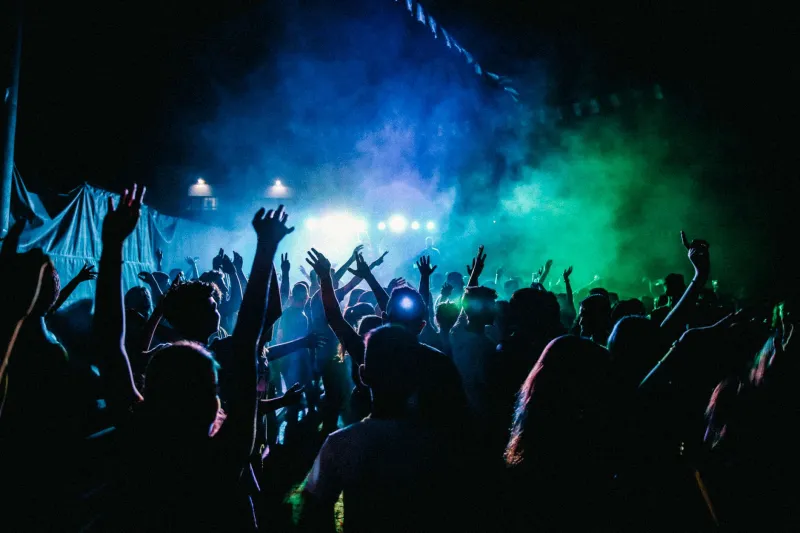
If you want to get ahead of the curve, start with some playlist deep dives — search "Balkan trap 2024" or "turbo folk new wave" on Spotify and let the algorithm do its thing. Follow some of the bigger Balkan music accounts on TikTok. And if you ever get the chance to go to a live Balkan music event in your city, go. The energy in those rooms is something you genuinely cannot replicate at home.
Just don't be surprised if you end up staying until 3 AM. That's kind of the whole point.